

“Why is this one sixteen times that one?”
That was the CFO’s only question. In front of him sat three SEO proposals for a Series A payments company in Lagos. The first asked for ₦600,000 a month. The second wanted ₦2.8 million. The third came from a shop used to UK clients and was priced at $7,500 a month, which is close to ₦10 million at an official rate hovering around ₦1,330. All three promised keyword research, technical SEO, and content. His Head of Growth, whom I’ll call Adaeze (she’s a composite of at least a dozen people I’ve sat across from this year), didn’t have an answer for him.
I don’t blame her. SEO has no standard unit. A kilo of rice weighs the same in every market in Lagos, while “ongoing SEO” can mean twenty hours from a junior specialist or sixty from a team that has ranked in your category before. Until you know which one you’re buying, the price tells you almost nothing, and the cheapest quote quietly becomes the default. Most of the expensive messes I’ve been hired to clean up started in a meeting exactly like that one.
So this guide answers the question every marketing leader asks sooner or later: how much does SEO cost in Nigeria in 2026? I’ll give you the naira and dollar ranges I see across Lagos and Abuja, show you what each budget buys, and flag the costs that never make it into the retainer. Then I’ll walk you through the budgeting method I use with clients. By the end, you should be able to put any two proposals side by side, find the real difference between them in half an hour, and walk into your next budget meeting with a number you can defend.
Want to Turn Organic Search Into Your #1 Revenue Channel?
Let’s Talk →How Much Does SEO Cost in Nigeria in 2026?
A serious SEO programme for a funded Nigerian company costs between ₦2.5 million and ₦8 million a month when an agency runs it. Freelancers charge roughly ₦250,000 to ₦800,000 a month. Enterprise and multi-market work is often billed in dollars and starts around $6,000 a month. A one-off technical audit with a roadmap usually lands between ₦800,000 and ₦5 million.
These numbers don’t come from a survey. They come from proposals I’ve reviewed for clients, pitched against, and priced myself across Lagos and Abuja over the last 18 months, so read them as field notes and expect your own quote to move with scope.
Dollar figures use the official rate:
CBN data put the naira at about ₦1,329.80 to the dollar on 21 September 2026, per Naija News.
| Provider type | Typical monthly fee (₦) | Approx. USD | What it usually covers |
|---|---|---|---|
| Freelance specialist | ₦250,000 to ₦800,000 | $190 to $600 | On-page fixes, keyword research, a monthly report. Content is usually extra. |
| Small or mid-tier agency | ₦800,000 to ₦2,500,000 | $600 to $1,900 | Technical and on-page work plus four to six articles a month |
| Growth programme for startups and scaleups | ₦2,500,000 to ₦8,000,000 | $1,900 to $6,000 | Strategy, technical SEO, 8 to 16 content pieces, digital PR, AEO, pipeline reporting |
| Enterprise or multi-market | ₦8,000,000 and above | $6,000 to $25,000+ | Several markets, regulated review cycles, programmatic pages, a dedicated pod |
| One-off technical audit | ₦800,000 to ₦5,000,000 (project) | $600 to $3,800 | Crawl, diagnosis and a prioritised roadmap, with no implementation |
That spread looks mad until you see where the money goes. Adaeze’s three quotes were priced for three very different amounts of senior time. Only one of them said so.
What Semrush’s Pricing Data Tells a Nigerian Buyer
I use global benchmarks as a sanity check on the top end. Semrush’s research found that SEO agencies around the world charge an average of $134.14 an hour, and that half of SEO providers globally ask for a monthly retainer below $3,000, according to Semrush’s SEO pricing guide. At today’s official rate, that hourly figure is about ₦178,000, and the $3,000 line sits just under ₦4 million a month.
People doing the work see an even wider range. When a consultant asked what agencies charge in a Reddit thread on SEO agency pricing, one agency employee described both ends of the market:
“My current employer charges like 1k-3k/mo. for SEO packages at various tiers. Previous employer worked with extremely well known brands often paying 50k-100k+/mo.”
For a Nigerian buyer, one thing matters more than any average. The price follows the search results you’re fighting in, and your office address barely comes into it. A Lagos fintech going after “business account Nigeria” competes with local banks and a few neobanks. The same company chasing “send money to Nigeria from UK” runs into Wise, Remitly, and a wall of UK publishers with decades of links behind them. The second fight costs more because the competition sets the workload. That’s why Nigerian startups selling into the UK and US sometimes get quotes that feel foreign. The work behind them is foreign too.
How SEO Agencies Price their Work
Most SEO pricing in Nigeria follows one of four models, and in my experience the model tells you how the provider thinks about risk.
- Monthly retainers are a fixed fee for ongoing scope. They suit work that compounds, like content, technical maintenance, and link acquisition, and they’re the default for good reason.
- Project fees buy a defined deliverable, such as an audit, a site migration or a content hub build. They make sense when you have people in-house to execute.
- Hourly or day rates are common with senior consultants and advisory work. They’re transparent, though they reward time logged more than outcomes.
- Performance-based pricing ties fees to rankings or leads. Finance teams love the idea. The providers I’ve seen offer it tend to drift toward easy, low-value keywords they can hit on schedule.
Every one of these models comes down to hours from a person of a certain seniority. Someone who has run SEO departments at several agencies put the maths plainly in the same discussion on what agencies charge for SEO:
“Take £10k per month on average, that equates to about 67 hours of work.”
That line is the most useful tool in this article, and I call it the hours test. Ask every provider how many hours your account gets each month and who does them, by role. Then divide the fee by the senior hours. When Adaeze pressed, her ₦600,000 quote turned out to cover about 20 hours from a mid-level specialist, with no strategist anywhere. The ₦2.8 million quote committed around 55 hours, 15 of them from a senior lead. Once the hours were on the table, the price gap stopped looking strange.
What Drives the Cost of SEO Up or Down
When I compare two quotes for the same company, five things explain most of the difference.
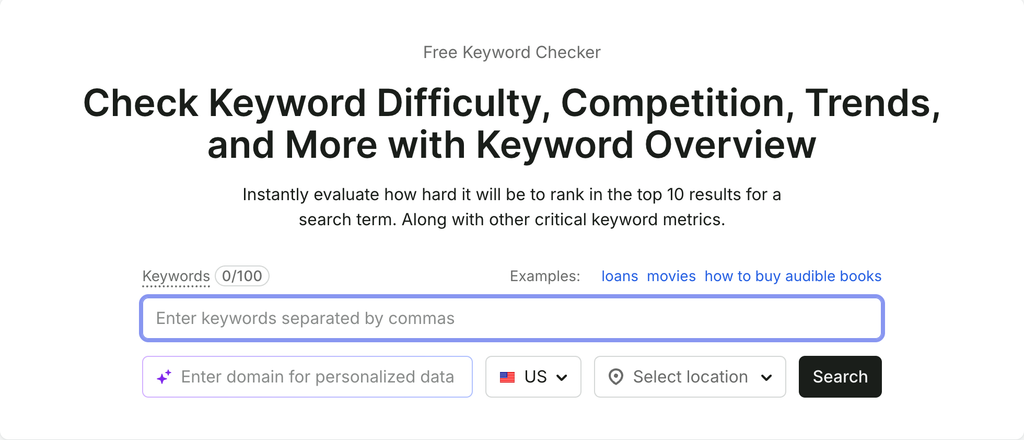
Competition comes first. A proptech firm targeting “3 bedroom flat for rent in Lekki” faces a handful of property portals. A B2B SaaS company targeting “payroll software” globally faces funded American competitors with twenty-person content teams. Before you brief anyone, run your ten priority terms through Semrush’s Keyword Overview and look at who ranks. If the top five are household names, plan for the upper bands.
Content volume and depth come next, and content is usually the biggest line in a serious programme. A 2,500-word article that your compliance officer will sign, written by someone who understands your product, costs far more than a generic blog post. Twelve of those a month is a different business from four.
Regulated review cycles change the maths in banking, insurance, pensions and healthcare. CBN, NAICOM, PenCom and NDPA rules mean every claim goes through legal, and I’ve seen that add two to three weeks per asset. The agency fee may stay the same, but your timeline stretches and your internal costs rise, so it belongs in the budget.
Technical debt eats early months. A JavaScript-heavy site that search engines struggle to render, a botched migration that broke thousands of URLs, or a CMS nobody can touch without a developer will swallow the first quarter. Sometimes I tell clients the right first spend is website development, and content can wait.
Markets and languages multiply the work. Each new market brings its own keyword research, localised pages and link building. If you sell to Nigeria, Ghana and the UK, you’re running three programmes on one codebase.
Answer engine optimisation now cuts across all five. Buyers ask ChatGPT, Perplexity and Google’s AI Overviews before they search, and getting into those answers takes structured content plus mentions on credible sites you don’t own. That’s why digital PR has moved from optional extra to a standing line in most growth programmes I scope.
What Each SEO Budget Actually Buys
A price means nothing until you know the scope behind it. These are the three budgets I see most often from funded Nigerian companies, and what each one tends to deliver.
₦700,000 a Month
This buys maintenance. You’ll typically get a technical health check, on-page fixes to existing pages, a keyword list, perhaps two articles, and a monthly report. If your site is already healthy and nobody is contesting your market, that can hold ground. If you’re a Series A company trying to take share from a funded competitor, it won’t move pipeline. You’re paying for a subscription to a PDF.
₦3.5 million a Month
At this level, SEO starts to behave like a revenue channel. A senior strategist owns the roadmap. The team ships eight to twelve pieces of content a month mapped to buying intent, works through technical fixes in sprints with your developers, earns a few good mentions through PR, and reports on leads and pipeline next to traffic. Most of the growth-stage SEO engagements I run sit in this band.
$10,000 a Month and Above
This is multi-market or enterprise territory: a Nigerian SaaS company selling into the US and UK, say, or a bank rebuilding thousands of product and branch pages. You get a dedicated pod, programmatic page builds, sustained PR across markets, and analysts who connect organic data to your CRM. The Hospital Book reached 40K monthly organic traffic through programmatic SEO, and builds like that need this level of engineering and content capacity.
Want to Turn Organic Search Into Your #1 Revenue Channel?
Let’s Talk →The Hidden Costs Outside Your SEO Retainer
The retainer is rarely the whole bill, and four costs catch Nigerian marketing teams out almost every budget cycle.
The first is tooling priced in dollars. Semrush’s Advanced plan costs $549 a month on monthly billing and is the tier that adds SEO share of voice and API data integration, according to Semrush’s pricing page. That’s roughly ₦730,000 a month at the official rate, and more once your bank adds its FX margin. A naira budget approved in January can be short by March. Ask whether your agency’s fee covers tool access or whether you’re paying for it separately. I’ve written up the SEO tools we use at SEO Next Door Ltd, including cheaper options for teams watching dollar spend.
Developer time is the second. Technical recommendations sit in a backlog until an engineer picks them up, so budget sprint capacity or accept that your audit becomes an expensive document.
Third, subject-matter experts and legal reviewers cost money even when nobody invoices for them. Content that ranks in fintech or healthtech needs input from people inside the business, and their hours come from somewhere.
The fourth is measurement. If GA4 and your CRM don’t talk to each other, you’ll never prove what organic contributes to pipeline. Sorting that out through proper digital marketing analytics often pays for itself in the first board meeting.
Why the Cheapest SEO Quote Usually Costs the Most
A provider competing on price has one real lever, which is cutting hours. The Reddit thread I’ve been quoting began with a consultant planning to pitch himself as the cheap alternative to big agencies. The most useful reply warned him off, and the logic holds just as well from the buyer’s side:
“If your clients are only working with you because you’re cheap, you’re only going to attract clients who don’t want to pay to have things done well.”
Another experienced contributor in the discussion on SEO agency fees added a line I’d happily pin above every procurement desk in Lagos:
“There will always be somebody cheaper.”
The bill for a cheap engagement usually arrives nine months later. I watched a funded Lagos B2B company spend three quarters on a low-cost retainer that published 40 articles, every one aimed at informational keywords with no route to a demo request. Traffic went up, and pipeline didn’t budge. The next agency had to prune half the content before building anything. That company lost a budget cycle and a headcount, and the CFO stopped trusting organic altogether.
Price is still a fair filter. I just think the better question is what you get per senior hour, and whether anyone has connected the plan to revenue.
How Long Before SEO Pays Back?
I tell clients to expect three to four months of foundation work before organic growth shows clearly, and six to twelve months before it carries meaningful pipeline. If someone promises page-one rankings in 30 days, they’re selling you paid media with extra steps.
Once the strategy is right, the curve can steepen quickly. Oxgital grew organic traffic by 3,500% in 7 months, and MainSqueeze grew organic traffic by 4,800% in 8 months. Sidebrief saw 1,631% organic traffic growth, and DualMint’s SEO performance improved by 38,286%. None of those came from the cheapest option on the table. Each came from content matched to what buyers were searching for, shipped every month without gaps.
Market size matters for payback as well. Nigeria had 109 million internet users at the end of 2025, with online penetration at 45.5%, according to DataReportal’s Digital 2026 Nigeria report. Search demand in many Nigerian B2B categories is still climbing, so the companies building organic assets now will pay less for their position than the ones who wait.
How to Set an SEO Budget Your CFO Will Sign
I always start from revenue and work backwards. A budget built on “what agencies charge” loses most arguments with finance, while one built on pipeline maths tends to win them.
- Set the organic revenue target. Say leadership wants ₦120 million in new annual contract value from organic within 12 months.
- Convert it into deals. With an average contract value of ₦12 million, that’s 10 closed deals.
- Work back through your funnel. At a 20% SQL-to-close rate, you need 50 SQLs. At 30% lead-to-SQL, that’s about 167 leads. At 1.5% conversion on bottom-funnel pages, you need roughly 11,100 high-intent visits over the year.
- Check that the demand exists. Use Semrush’s Keyword Magic Tool, filtered for commercial and transactional intent, to confirm your target markets have enough search volume to supply those visits. If they don’t, change the target before you touch the budget.
- Price the work needed to capture it. Count the pages, content pieces, technical fixes, and links, then run the hours test on every quote.
- Test the payback. A ₦4 million monthly programme costs ₦48 million a year. Against ₦120 million in new contract value, most CFOs will hear that case, especially since ranked pages keep producing after the spend stops.
This was the conversation Adaeze needed with her CFO. Choosing between three quotes was the wrong place to start. She first had to agree on how much pipeline organic should carry, and only then ask which provider had priced the work to get there.
Red Flags in an SEO Proposal
I run every proposal through this checklist before it goes anywhere near procurement:
- Guaranteed rankings or guaranteed page-one positions
- A fee with no named people, roles, or hours attached
- Reporting built only on traffic and impressions, with nothing on leads or pipeline
- Link building sold as “50 backlinks a month”
- A 12-month lock-in with no performance review or exit clause
- The agency owning your GA4, Search Console or content accounts
- A content plan with no keywords tied to buying intent
- Silence on AI search visibility and how the work will show up in answer engines
If I see two or more of these, I’m looking at activity dressed up as strategy. A good provider will walk you through their process and the maths behind every line without you having to ask twice.
Frequently Asked Questions About SEO Cost in Nigeria
Is SEO cheaper than Google Ads in Nigeria?
Month to month, a strong SEO programme can cost as much as a modest paid search budget. What differs is what you own afterwards. Paid clicks stop the day the budget stops, while ranked pages keep producing. In most accounts I’ve managed, cost per lead from organic falls quarter after quarter as paid costs creep up with competitors bidding on the same terms.
How Much Should a Funded Startup Spend on SEO?
Most Seed to Series B companies I work with spend between ₦2.5 million and ₦6 million a month once content is included. A sharper answer comes from the pipeline method above: decide what organic has to deliver, then price the work to get there.
Can We Pay for SEO in Naira?
Most Nigerian agencies bill local clients in naira. Providers with foreign cost bases, or those working your UK and US markets, may bill in dollars. Either way, ask who carries the FX risk on tooling and get the answer written into the contract.
Want to Turn Organic Search Into Your #1 Revenue Channel?
Let’s Talk →What to do With this Before Your Next Budget Meeting
Adaeze’s CFO wanted to know why one quote was sixteen times another. The honest answer is that the quotes were buying different amounts of senior time, aimed at different amounts of pipeline, and only one provider showed the maths. SEO pricing in Nigeria will keep looking chaotic until you force every proposal into the same shape: hours, people, deliverables, and the revenue they’re supposed to produce.
This week, pull the proposals on your desk and run the hours test on each one. Then trace your organic revenue target back through your funnel and see which proposal was actually priced to hit it. If you want a second pair of eyes, book a call with us. Bring your last two quarters of Search Console and GA4 data along with the quotes you’re weighing, and I’ll show you where organic pipeline is leaking and what closing that gap should cost, in naira and in hours.